How Travel Can Save the Rainforest

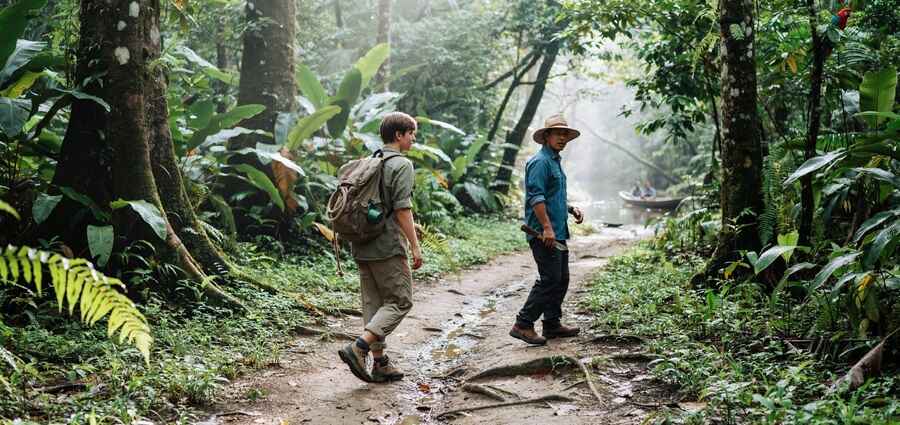
Rainforests are among the most fascinating places on Earth. Their towering trees, rivers, wildlife, and diverse plant life attract travelers who want to experience nature in a more meaningful way.
But these forests also face serious pressures, including deforestation, habitat loss, pollution, and climate change.
So, can travel help?
Travel alone cannot save the rainforest. However, when tourism is planned and practiced responsibly, visitor spending can support local businesses, conservation programs, protected areas, and communities that depend on healthy forests.
For travelers, that means a rainforest trip can be more than a sightseeing experience. The choices you make before and during your journey can help reduce harm and support places that are working to protect their natural environments.
In this guide, we’ll explore why rainforests matter, some remarkable rainforest destinations, and practical ways travelers can make a positive difference.
Why Rainforests Matter to Travelers
Rainforests are important far beyond the places where they grow.
They provide habitats for an enormous variety of plants and animals, influence water cycles, store carbon, and support communities whose livelihoods are connected to natural resources.
For travelers, these forests also create opportunities to learn about wildlife, ecosystems, local cultures, and conservation.
But simply visiting a rainforest does not automatically help protect it.
Tourism can create jobs and generate income for guides, accommodation providers, transportation services, restaurants, park systems, and local businesses. In destinations with well-managed tourism programs, visitor spending can become part of a broader conservation and community-development system.
Costa Rica, for example, encourages travelers to respect protected areas, choose responsible tourism businesses, and spend money with local communities. More than a quarter of the country’s territory is reserved for conservation, according to its tourism authority.
That is why how you travel matters just as much as where you travel.
Understanding the Rainforest
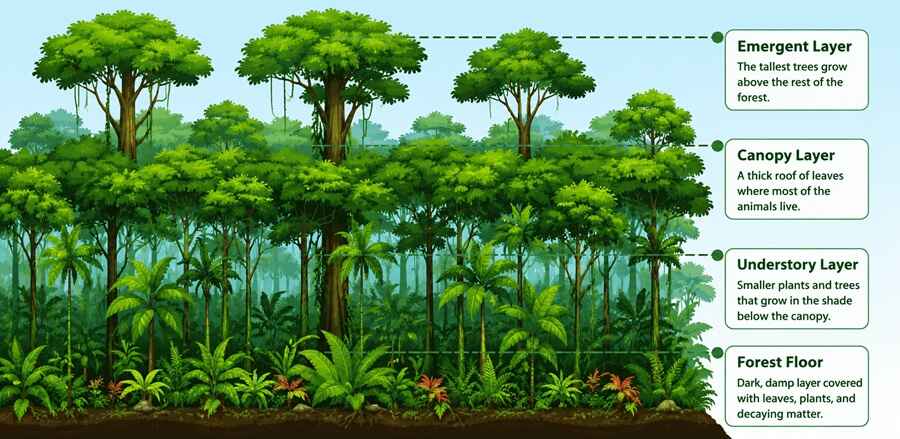
Before exploring rainforest destinations, it helps to understand how these ecosystems are structured.
A tropical rainforest is often described using four main layers:
1. Emergent Layer
The tallest trees rise above the rest of the forest and receive intense sunlight.
2. Canopy Layer
The canopy forms a dense roof of leaves and branches. Many rainforest animals spend much of their lives here.
3. Understory Layer
This darker layer receives less sunlight and contains smaller trees, shrubs, vines, and plants adapted to lower light.
4. Forest Floor
The forest floor receives very little direct sunlight. Fallen leaves and other organic material break down here and contribute to the forest ecosystem.
Not every rainforest is identical, and scientists may describe forest structure in slightly different ways. Tropical rainforests are especially common in regions around the equator, while temperate rainforests occur in cooler, wetter parts of the world.
Tip: If your article includes your “Four Main Layers” image, place it directly after this section. It will make the explanation much easier to understand visually.
5 Rainforest Destinations Worth Exploring
1. The Amazon Rainforest
The Amazon is the world’s largest tropical rainforest and stretches across several South American countries.
Travel experiences vary by location, but visitors may explore the forest by boat, walk with local guides, observe wildlife, or learn about rainforest ecosystems and local communities.
Because the Amazon is enormous, responsible travelers should choose their specific destination carefully rather than treating the entire rainforest as one tourism area.
Travel responsibly
- Use experienced local guides.
- Follow wildlife-viewing rules.
- Stay on designated routes where required.
- Avoid disturbing animals.
- Reduce unnecessary waste.
- Support legitimate local businesses and community-based experiences.
A rainforest trip becomes more meaningful when you learn about the ecosystem instead of simply collecting photographs.
2. Costa Rica
Costa Rica is one of the best-known destinations for nature and rainforest travel.
The country has numerous protected areas and national parks, including Corcovado, Tortuguero, Cahuita, and others. Its official tourism resources encourage visitors to use qualified guides and responsible tourism businesses while respecting protected landscapes. (Visit Costa Rica)
Travelers can enjoy activities such as:
- Forest walks
- Wildlife observation
- Birdwatching
- River experiences
- Nature photography
- Guided ecological tours
Community-based tourism can also connect visitors with local culture and livelihoods. Costa Rica’s tourism authority specifically highlights rural and community-based tourism as a way to connect visitors with local communities and sustainable practices. (Visit Costa Rica)
Travel responsibly
Stay on marked trails, follow park rules, avoid feeding wildlife, and consider locally operated or appropriately certified tourism services.
3. Borneo
Borneo is an island shared by Indonesia, Malaysia, and Brunei, and it contains some of Southeast Asia’s most important tropical forest landscapes.
The region is known for its biodiversity and wildlife, including species such as orangutans, proboscis monkeys, and many bird species.
Rainforest travelers can experience guided walks, river journeys, wildlife observation, and visits to conservation-oriented areas.
Travel responsibly
Wildlife encounters should always be respectful.
Never feed wild animals simply to get a better photograph, and follow the instructions of guides and protected-area authorities.
Choosing responsible local operators can also help keep tourism connected to local economies and conservation efforts.
4. The Congo Basin
The Congo Basin is not a single tourism destination. It is a vast rainforest region covering parts of Central Africa.
It is one of the world’s major tropical forest regions and supports exceptional biodiversity as well as communities whose lives and livelihoods are connected to the forest.
Travel opportunities vary considerably between countries and locations, so travelers should research their specific destination rather than assuming that the whole region offers the same experiences or access.
Travel responsibly
If you visit a rainforest destination within the Congo Basin:
- Follow local conservation rules.
- Use reputable local guides or operators.
- Respect communities and cultural practices.
- Avoid disturbing wildlife.
- Check current travel and access information before your trip.
The most responsible approach is to treat the forest as a living ecosystem and community landscape—not simply as an adventure backdrop.
5. The Daintree Rainforest, Australia
Australia’s Daintree Rainforest offers a different rainforest experience, combining tropical forest with coastal landscapes.
Visitors can explore designated walking areas, enjoy viewpoints, learn about local ecology, and experience the relationship between rainforest and coastline.
The area is part of the broader Wet Tropics of Queensland, an internationally significant tropical rainforest region.
Travel responsibly
Stay on marked paths, follow local wildlife guidelines, avoid taking natural objects from the forest, and respect cultural information and local communities.
Small choices can make a difference when many visitors are sharing the same fragile environment.
How Can Travel Support Rainforest Conservation?
Responsible tourism can support rainforest conservation in several ways.
1. Visitor Spending Can Support Local Economies
Money spent on accommodation, guides, transportation, food, entrance fees, and locally produced goods can support people living and working in rainforest regions.
However, not every tourism dollar automatically goes toward conservation, so travelers should look for businesses and programs that clearly explain their environmental or community practices.
2. Tourism Can Create Conservation-Related Jobs
When natural areas attract responsible visitors, local communities may have opportunities connected to guiding, hospitality, transportation, conservation education, and other tourism services.
This can create economic reasons to maintain healthy natural areas, although the results depend on how tourism is planned and managed.
3. Travelers Can Learn About Conservation
A good rainforest trip can change how people understand forests and wildlife.
Guided experiences, visitor centers, conservation programs, and local educational projects can help travelers understand why these ecosystems matter.
4. Responsible Tourism Can Reduce Pressure
Well-managed tourism can encourage visitors to use designated trails, follow wildlife rules, reduce waste, and respect protected areas.
That is very different from uncontrolled tourism, which can contribute to litter, habitat disturbance, overcrowding, and other environmental problems.
How Can You Be a Responsible Rainforest Traveler?
Here are practical steps you can take before and during your trip.
Before Your Trip
- Research the destination and protected area.
- Choose responsible accommodation when possible.
- Look for reputable local guides and operators.
- Learn the basic rules of the park or forest.
- Check weather, access conditions, and current visitor information.
- Learn about local customs before arriving.
While Exploring
- Stay on marked trails.
- Never feed or intentionally disturb wildlife.
- Do not collect plants, rocks, shells, or other natural objects where removal is prohibited.
- Take your waste with you.
- Reduce unnecessary single-use items.
- Keep noise low around wildlife.
- Ask permission before photographing people.
- Respect local cultural practices.
- Support local businesses when appropriate.
Costa Rica’s official responsible-tourism guidance similarly recommends staying on designated paths, not feeding or disturbing wildlife, reducing single-use items, buying from local businesses, and asking before photographing people.
A Simple Rainforest Eco-Travel Checklist
Before leaving for your rainforest adventure, ask yourself:
- Did I research the destination?
- Did I check current park rules?
- Did I choose a responsible guide or operator?
- Do I have suitable walking shoes?
- Did I pack reusable essentials?
- Do I know how to manage my waste?
- Will I stay on marked trails?
- Will I avoid feeding wildlife?
- Will I respect local communities?
- Will I ask before taking photographs of people?
- Will I avoid unnecessary single-use products?
- Will I support local businesses when appropriate?
- Will I leave natural objects where they belong?
These habits may seem small, but responsible travel is built from many small decisions.
Rainforest Travel and Your Carbon Footprint
Getting to a rainforest destination can also have an environmental impact.
Flights, transportation, accommodation, food, and other parts of a trip contribute to your overall travel footprint.
You don’t need to make travel perfect to make better choices. Instead, focus on realistic improvements such as reducing unnecessary waste, choosing efficient transportation when practical, staying longer rather than taking many short trips, and selecting accommodations with credible sustainability practices.
For more practical ideas, read: 10 Ways to Reduce Your Carbon Footprint While Traveling.
What Should You Avoid in a Rainforest?
Responsible travel also means knowing what not to do.
Avoid:
- Feeding wild animals
- Chasing animals for photographs
- Leaving litter behind
- Taking plants or natural objects without permission
- Going off marked trails where prohibited
- Making unnecessary noise
- Ignoring local or park rules
- Treating local communities as tourist attractions
- Supporting businesses that clearly encourage harmful wildlife interactions
The goal is simple: observe nature without becoming a disturbance to it.
Why Responsible Rainforest Travel Matters
A rainforest is not simply a beautiful place to visit.
It is a complex ecosystem, a habitat for wildlife, a natural resource, and home to communities and cultures.
That means travelers should think beyond the question, “What can I see?”
A better question is:
“How can I experience this place while leaving as little harm as possible?”
That mindset can change the entire travel experience.
Instead of rushing from one attraction to another, you can take time to learn from local guides, understand the ecosystem, support appropriate local businesses, and respect the environment around you.
Frequently Asked Questions
Can tourism really help save rainforests?
Tourism cannot save rainforests by itself. However, well-managed and responsible tourism can support local economies, conservation-related activities, protected areas, and environmental education.
What is the most important rule when visiting a rainforest?
Respect the environment. Stay on designated paths, follow local rules, avoid disturbing wildlife, and take your waste with you.
Should I choose an eco-lodge?
An eco-lodge can be a good option, but don’t rely only on the word “eco.” Look for clear information about its environmental and community practices.
How can travelers support local communities?
Choose locally operated services when appropriate, eat at local businesses, purchase legitimate locally made products, and use qualified local guides.
Is rainforest tourism always environmentally friendly?
No. Tourism can also create waste, pollution, wildlife disturbance, and pressure on fragile areas. That’s why responsible planning and visitor behavior are important.
Conclusion
Rainforests don’t need more visitors simply because they are beautiful. They need responsible visitors who understand that every journey has an impact.
Travel can support rainforest conservation when visitors choose responsible operators, respect protected areas, support local communities, reduce waste, and treat wildlife and natural environments with care.
You don’t have to be a perfect eco-traveler. Start with simple choices: stay on marked trails, carry your waste out, respect wildlife, learn from local guides, and spend thoughtfully.
Travel helps us experience the world. Responsible travel can help us protect the places that make those experiences possible.