How to Prevent Common Foot Problems While Travelling


Travelling often means walking through new cities, exploring nature trails, visiting famous attractions, and spending long hours on your feet. While these activities can make a trip exciting, they can also cause common foot problems.
After a busy day of sightseeing, you may notice tired feet, blisters, dry skin, or swelling. These problems can make it harder to enjoy your holiday.
The good news is that simple foot-care habits can help prevent many of these problems. Comfortable shoes, clean socks, regular breaks, and good foot hygiene can make a big difference.
In this post, you’ll discover how to prevent common foot problems while travelling and keep your feet comfortable during your next trip.
How to Keep Your Hands and Nails Soft and Healthy While Traveling
Common Foot Problems While Travelling
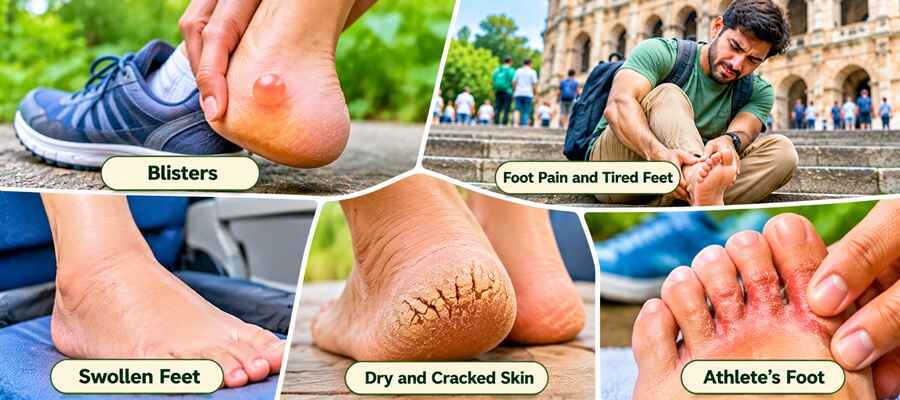
Long walks, different weather, and changes to your daily routine can affect your feet. Here are some common foot problems travellers may experience.
1. Blisters
Blisters are small pockets of fluid that can form when your skin rubs against shoes or socks. Tight shoes, poor-fitting footwear, and long walks can increase friction.
They often appear on the heels, toes, or sides of the feet. Wearing comfortable shoes and clean socks can help reduce the risk.
2. Foot Pain and Tired Feet
Walking around tourist attractions for several hours can make your feet feel tired or uncomfortable.
Shoes without enough support may also add pressure to your feet. Regular breaks and comfortable footwear can help.
3. Swollen Feet
Your feet or ankles may become swollen after sitting for a long time during a flight, bus ride, or train journey.
Long periods of sitting can affect normal blood flow in your legs. Temporary swelling can also happen after spending a busy day on your feet.
However, sudden or unexplained swelling should not be ignored, especially if it affects only one leg or comes with pain, redness, or warmth.
4. Dry and Cracked Skin
Different weather conditions, dry air, and frequent walking can make your feet dry.
The skin around your heels may become rough or cracked. Regular moisturising can help keep the skin soft and comfortable.
5. Athlete’s Foot
Athlete’s foot is a common fungal infection that can affect the skin between the toes and other parts of the feet.
Warm, damp conditions can encourage fungal growth. Sweaty socks, wet shoes, and shared shower areas may increase the risk.
Keeping your feet clean and dry is an important part of prevention.
Choose Comfortable Shoes Before Your Trip

The right shoes can make travelling much more comfortable. Since you may walk more than usual during a holiday, choose footwear that fits your feet properly.
Here are some useful tips:
- Choose the Right Size: Your shoes should not feel too tight or too loose.
- Look for Good Support: Choose shoes with comfortable soles and enough support for your planned activities.
- Avoid Brand-New Shoes: Do not wear new shoes for the first time on a long sightseeing trip. Try them at home before travelling.
- Check the Weather: Breathable shoes may be useful in warm weather, while suitable closed shoes can help in cold or rainy conditions.
- Pack a Second Pair: If possible, carry another comfortable pair so you can change your footwear.
- Choose Shoes for Your Activities: Walking shoes, hiking shoes, and sandals serve different purposes. Select footwear that suits your travel plans.
Travel Tip: Wear your chosen travel shoes around before your trip. This gives you time to check whether they rub or cause discomfort.
Wear the Right Socks

Socks help protect your feet from friction and absorb sweat. Wearing the right pair can make long walks more comfortable.
Follow these simple tips:
- Choose clean and comfortable socks.
- Use breathable or moisture-wicking materials.
- Change your socks when they become wet or sweaty.
- Avoid socks that feel too tight.
- Pack extra pairs for long trips.
- Make sure your socks fit properly inside your shoes.
Clean, dry socks can help reduce skin irritation and lower the risk of fungal infections.
Take Care of Your Feet During Long Walks

Walking is a great way to explore a new destination. However, walking for too long without resting can make your feet tired.
You can follow these simple habits:
- Take Regular Breaks: Sit down and rest during long sightseeing days.
- Listen to Your Body: Do not ignore pain or discomfort.
- Choose Comfortable Routes: Avoid walking longer distances than you feel comfortable with.
- Increase Walking Gradually: If you are not used to long walks, build up your walking time before your trip.
- Stay Hydrated: Drink enough water throughout the day.
- Rest After Sightseeing: Give your feet time to recover after a busy day.
A little rest during your journey can help you enjoy the next activity more comfortably.
Prevent Blisters While Travelling
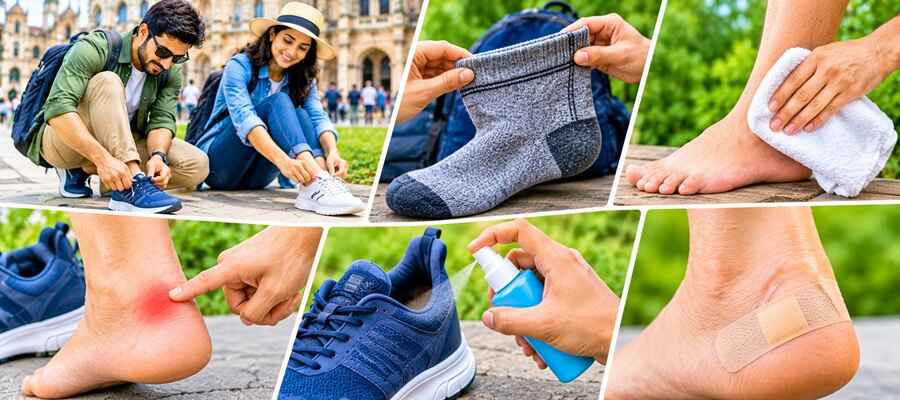
Blisters can make walking difficult, especially when you are visiting several places in one day.
Here are some ways to reduce the risk:
- Wear properly fitting shoes.
- Choose comfortable socks that do not bunch up.
- Keep your feet clean and dry.
- Notice areas where your shoes rub against your skin.
- Stop and check your footwear if you feel repeated rubbing.
- Use suitable blister-protection products on areas that often rub.
If you develop a blister, avoid popping it yourself. Keep the area clean and protect it with a suitable dressing.
If it becomes increasingly painful, red, warm, or shows signs of infection, seek medical advice.
Prevent Swollen and Tired Feet During Long Journeys
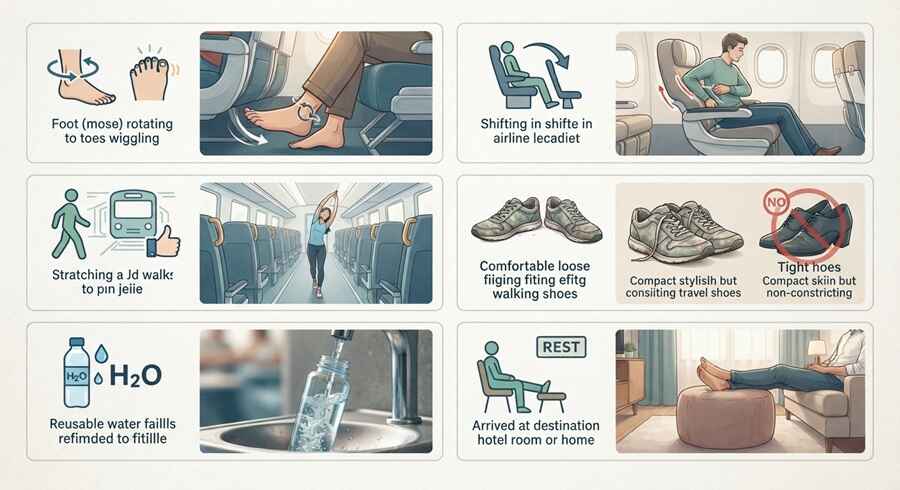
Long flights, bus rides, and train journeys often involve sitting for several hours. Staying in the same position for a long time can cause your feet and ankles to feel uncomfortable or swollen.
Try these simple steps during long journeys:
- Move Your Feet: Gently move your ankles and toes while sitting.
- Change Your Position: Avoid staying in the same position for too long.
- Walk When Safe: Take short walks when it is safe and allowed.
- Wear Comfortable Shoes: Avoid tight footwear during long journeys.
- Drink Water: Stay hydrated throughout your trip.
- Rest After Arrival: Give your feet some time to relax after reaching your destination.
Important Health Note: Sudden swelling in one leg, especially with pain, redness, or warmth, needs urgent medical assessment. If you experience chest pain or difficulty breathing, seek emergency medical help.
Pack a Small Travel Foot-Care Kit
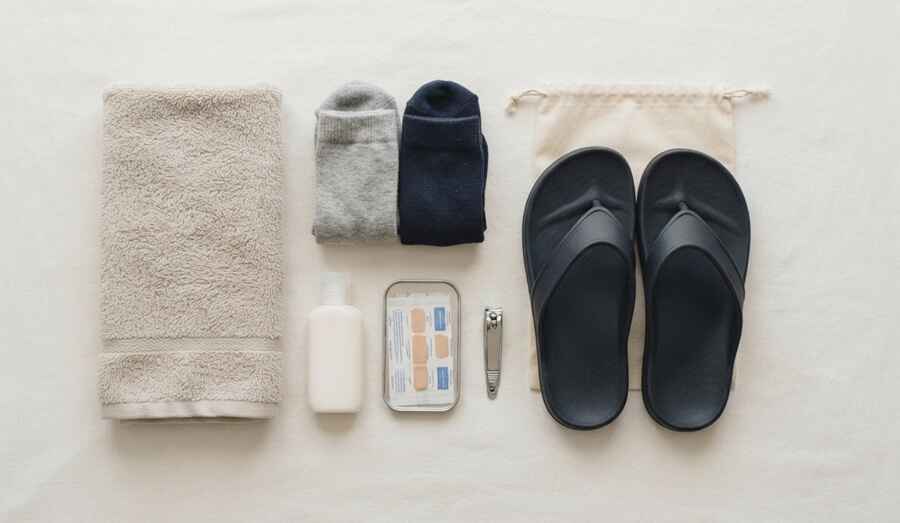
A small foot-care kit can help you manage simple foot-care needs during your trip. You do not need to pack many products.
Consider carrying these useful items:
- Extra Socks: Pack a few clean pairs for changing during the day.
- Small Moisturiser: Use it to care for dry skin on your feet.
- Blister Bandages: Carry suitable dressings to protect areas affected by rubbing.
- Small Towel: Keep a clean towel for drying your feet.
- Nail Clipper: Carry one if you need to trim your toenails.
- Comfortable Sandals: Use them when suitable, especially in shared shower areas.
- Personal Foot-Care Products: Bring any products your healthcare professional recommends.
Keep your foot-care items clean and store them in a small pouch.
Follow a Simple Daily Foot-Care Routine While Travelling
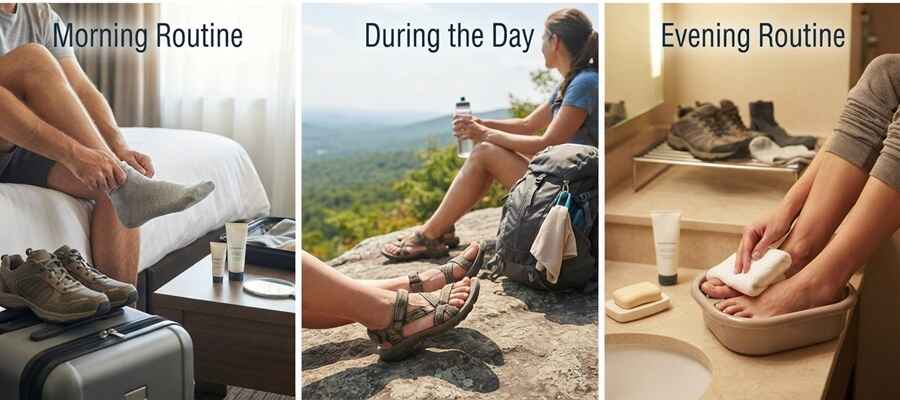
You do not need a long routine to care for your feet. A few simple steps in the morning, during the day, and at night can help.
Morning Routine
- Wear clean, comfortable socks.
- Choose shoes that fit properly.
- Check your feet for rubbing or discomfort.
- Apply moisturiser to dry areas if needed. Avoid putting it between your toes.
During the Day
- Take breaks during long walks.
- Keep your feet as dry as possible.
- Change wet or sweaty socks.
- Check for signs of rubbing or blisters.
- Rest when your feet feel tired.
Evening Routine
- Wash your feet with clean water and mild soap.
- Dry carefully, especially between your toes.
- Check for blisters, redness, or unusual changes.
- Apply moisturiser to dry areas.
- Let your shoes and socks dry before wearing them again.
This simple routine can help you notice small problems before they become more uncomfortable.
When Should You Seek Medical Help?
Most minor foot problems can improve with basic care. However, some symptoms need professional attention.
Consider seeking medical advice if you notice:
- Severe or worsening foot pain.
- A wound that does not heal.
- Increasing redness, warmth, or discharge around a wound.
- Sudden or unexplained swelling.
- Difficulty walking or putting weight on your foot.
- A foot problem that does not improve with basic care.
People with diabetes, poor circulation, or reduced feeling in their feet should take extra care. Even small cuts or blisters may need professional attention. If you are unsure about a foot problem, speak with a healthcare professional rather than ignore it.
Conclusion
Foot problems can make travelling uncomfortable, but a few simple habits can help you avoid many common issues.
Choose comfortable shoes, wear clean socks, take regular breaks, and keep your feet clean and dry. Also, carry a small foot-care kit and check your feet after a busy day.
Don’t ignore persistent pain, unusual swelling, or signs of infection. Seek medical advice when needed.
You do not need an expensive foot-care routine to enjoy a trip. Simple daily care and comfortable footwear can make a big difference.