From Alexandria to the Nile: Exploring Cleopatra’s Egypt

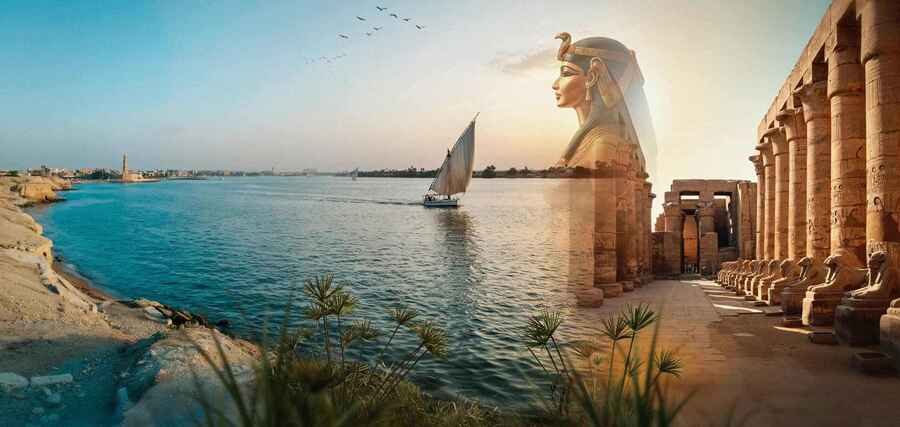
Ancient Egypt continues to fascinate travelers around the world, and Cleopatra VII remains one of its most famous rulers. Known for her political skill, education, diplomacy, and leadership, Cleopatra ruled Egypt during a dramatic period of ancient Mediterranean history.
Her story is closely connected with Alexandria, the Mediterranean city that served as the political center of her kingdom, as well as with the wider Egyptian landscape shaped by the Nile, temples, and ancient religious traditions.
Today, travelers can explore archaeological sites, museums, temples, and historic landscapes that help explain the world Cleopatra lived in. From the Mediterranean coast to the Nile Valley, these destinations offer history lovers a chance to discover ancient Egypt from a different perspective.
What Cleopatra Can Teach Modern Travelers
Cleopatra’s story offers more than an interesting historical figure to learn about. Her life was closely connected with politics, diplomacy, culture, language, and the changing relationships between Egypt and the wider Mediterranean world.
For modern travelers, her story can be a reminder to look beyond famous attractions and learn about the history and culture of the places they visit.
Understanding why a city, temple, or river was important can make a journey more meaningful. Visiting museums, learning about local traditions, and exploring historical sites with curiosity can help travelers connect more deeply with a destination.
Cleopatra’s Egypt was also a place where different cultural traditions met. Exploring that history encourages travelers to appreciate how civilizations influence one another over time.
If ancient rulers and historical journeys inspire your travel plans, you can also explore 10 Alexander the Great Sites Every History Fan Must See for another journey through the ancient world.
From Alexandria to the Nile: Exploring Cleopatra’s Egypt
1. Alexandria – The Queen’s City
Alexandria was the political center of Cleopatra’s Egypt and one of the most important cities in the ancient Mediterranean.
Cleopatra ruled from Alexandria and became involved in the major political struggles of her time. The city was also where she encountered powerful Roman figures, including Julius Caesar and Mark Antony.
Much of ancient Alexandria has changed or disappeared over the centuries, but the modern city still offers travelers many ways to explore its long history.
Today, visitors can explore the Bibliotheca Alexandrina, Qaitbay Citadel, Catacombs of Kom El Shoqafa, and the Greco-Roman Museum. A walk along the Mediterranean Corniche also offers a chance to experience the city’s modern coastal atmosphere.
The cooler months from October to April are often more comfortable for walking and sightseeing, although travelers should check current weather and attraction schedules before visiting.
2. The Nile – Lifeline of Egypt
The Nile River has played a central role in Egyptian civilization for thousands of years. It provided water and supported agriculture, transportation, trade, and settlement.
The river was also an essential part of the world Cleopatra ruled. Traveling through the Nile Valley today helps visitors understand why the river was so important to ancient Egyptian life.
Travelers can base a Nile-focused journey around Luxor and Aswan, with options ranging from river cruises to trains and road travel.
Along the way, visitors can explore famous places such as Karnak Temple, Luxor Temple, the Valley of the Kings, and Philae Temple.
Not every monument along the Nile dates from Cleopatra’s lifetime. Many Egyptian temples were built and expanded over much longer periods, but visiting them provides valuable context for understanding the religious and political traditions of the civilization in which Cleopatra ruled.
For outdoor sightseeing, start early when possible, carry water, wear comfortable clothing, and use sun protection.
3. The Lost Royal Quarter of Alexandria
Cleopatra’s royal world was closely connected with Alexandria’s ancient harbor and waterfront.
Over the centuries, parts of ancient Alexandria were affected by earthquakes, coastal changes, and other natural processes, and sections of the ancient city eventually became submerged.
Underwater archaeological work has revealed remains associated with ancient Alexandria, including architectural fragments, statues, columns, and other objects.
Although visitors cannot simply walk through Cleopatra’s original palace as they would a preserved ancient monument, the submerged archaeological remains offer an intriguing glimpse into the city’s ancient waterfront.
Exploring Alexandria’s museums and waterfront can help travelers imagine how dramatically the city has changed since Cleopatra’s time.
4. Temples, Power, and Religion
Religion was deeply connected with political authority in ancient Egypt, and temples played important religious, economic, and cultural roles.
Cleopatra presented herself within Egyptian religious traditions and supported temple projects during her reign. Some monuments associated with her period contain inscriptions or imagery connected with her rule.
The wider Nile Valley is filled with temples that reveal how Egyptian rulers connected political authority with religious traditions.
Karnak Temple, Luxor Temple, and Philae Temple are among the best-known sites travelers can explore. They were built and expanded across different periods, so they should not be viewed simply as “Cleopatra’s temples.”
Walking among their columns, carvings, and monumental structures can nevertheless help visitors understand the religious and royal culture of ancient Egypt.
Early morning or late afternoon can be especially pleasant for outdoor sightseeing, depending on the season and local opening hours.
A Suggested Cleopatra-Inspired Egypt Travel Route
A seven-day Cleopatra-inspired itinerary can combine Alexandria with major historical destinations along the Nile.
Days 1–2: Alexandria
Begin in Alexandria and explore its museums, archaeological attractions, Mediterranean waterfront, and the history of Cleopatra’s political center.
Day 3: Cairo
Spend a day in Cairo if your schedule allows. While Cairo itself is a much later city and should not be presented as Cleopatra’s city, it provides access to major Egyptian museums and other important historical attractions.
Days 4–5: Luxor
Travel to Luxor and spend two days exploring Karnak Temple, Luxor Temple, and the Valley of the Kings.
Take time to understand the history of the temples rather than rushing between attractions. The monuments represent many different periods of ancient Egyptian civilization.
Days 6–7: Aswan
Finish your journey in Aswan. Visit Philae Temple, enjoy views of the Nile, and explore the city’s historic surroundings.
This itinerary is designed as a history-focused travel journey inspired by Cleopatra’s Egypt, rather than a literal route that Cleopatra herself followed.
Practical Travel Advice
Egypt is a large country, so planning transportation between Alexandria, Cairo, Luxor, and Aswan is important.
Here are a few useful tips:
- Check current travel information: Entry requirements, transportation, opening hours, and local conditions can change.
- Plan transportation early: Trains, domestic flights, road travel, and Nile cruises offer different experiences and travel times.
- Carry water: Many archaeological sites involve outdoor walking in sunny conditions.
- Wear comfortable shoes: Ancient sites often include uneven surfaces and long walking distances.
- Dress respectfully: Light, comfortable clothing that respects local customs is a practical choice, particularly when visiting religious or cultural sites.
- Use sun protection: A hat, suitable clothing, and sunscreen can make outdoor sightseeing more comfortable.
- Consider a guide: A knowledgeable local guide can provide historical context that is difficult to get from the ruins alone.
- Check museum and temple schedules: Opening times and ticket arrangements can vary.
- Allow extra travel time: Distances between major Egyptian destinations can make a seven-day itinerary feel busy.
The cooler months from October to April are often more comfortable for sightseeing, especially when spending long periods outdoors.
Frequently Asked Questions
Was Alexandria Cleopatra’s capital?
Alexandria was the political center of Cleopatra’s kingdom and the main royal city from which she ruled Egypt.
Did Cleopatra build the temples at Luxor and Karnak?
No. Karnak and Luxor were developed over many centuries by different rulers. Cleopatra lived much later than the earliest phases of these temple complexes, although her reign was part of the long history of ancient Egyptian temple building.
Can visitors see Cleopatra’s palace today?
Cleopatra’s royal quarter in Alexandria has been affected by natural changes and parts of the ancient waterfront are underwater. Archaeological discoveries have revealed remains associated with ancient Alexandria, but there is no fully preserved palace that visitors can walk through today.
What places are most connected with Cleopatra?
Alexandria has the strongest direct connection with Cleopatra’s political life. Other Egyptian destinations, including the Nile Valley and temples, provide broader context for the civilization and religious traditions of her time.
How long do you need for a Cleopatra-inspired trip to Egypt?
A week can provide a good introduction to Alexandria and major Nile Valley destinations, but a longer trip allows more time for museums, archaeological sites, travel between cities, and less rushed exploration.
Conclusion
Traveling through Cleopatra’s Egypt is a fascinating way to connect ancient history with the places that remain today.
From Alexandria and its Mediterranean waterfront to the Nile Valley, Luxor, and Aswan, each destination offers a distinct perspective on the civilization and history surrounding Cleopatra.
The journey is not simply about searching for Cleopatra’s palace or following her exact footsteps. It is about understanding the cities, temples, rivers, cultures, and political traditions that shaped the Egypt she ruled.
For history-loving travelers, exploring these places can turn a famous story into a deeper understanding of the ancient world.
Follow the Nile, explore Alexandria, discover Egypt’s ancient monuments, and experience the history behind one of antiquity’s most famous queens.