How Travel Can Save the Rainforest: A Guide to Responsible Tourism

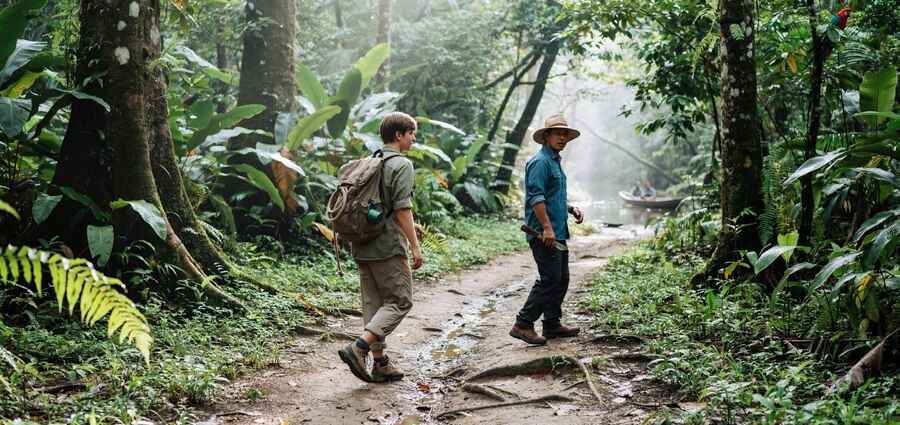
Rainforests are thick forests that get heavy rainfall throughout the year and are home to many plants and animals. They also help keep our planet healthy by storing carbon and supporting the natural water cycle.
However, rainforests face many threats. Deforestation, illegal logging, farming, and climate change are damaging these valuable forests. Protecting them requires support from governments, local communities, conservation groups, and people worldwide.
In this post, you’ll discover how travel can help save the rainforest, which destinations you can explore, and how to become a more responsible traveller.
10 Ways to Reduce Your Carbon Footprint While Travelling
Why Are Rainforests Important?
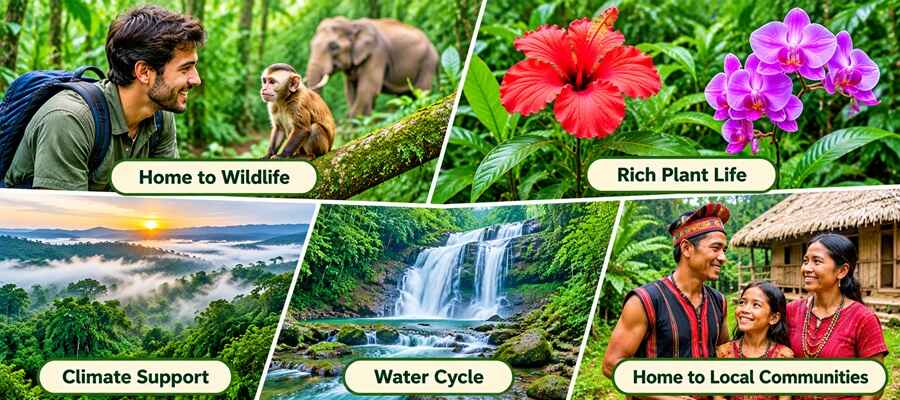
Rainforests are more than large areas filled with trees. They support life in many ways and help keep natural systems working.
They are also important for:
Home to Wildlife:
Rainforests provide shelter and food for many animals, birds, insects, and other living things.
Rich Plant Life:
They contain thousands of plant species. Some plants are also used by local people for food and traditional purposes.
Climate Support:
Rainforest trees take in carbon dioxide and store carbon. This helps reduce the amount of carbon in the atmosphere.
Water Cycle:
Rainforests release water vapour into the air and help support rainfall and local water systems.
Home to Local Communities:
Many Indigenous peoples and other local communities depend on forests for their homes, food, culture, and daily lives. When rainforests are damaged, wildlife loses its home, local communities face difficulties, and the environment can suffer.
How Does Travel Help Save the Rainforest?
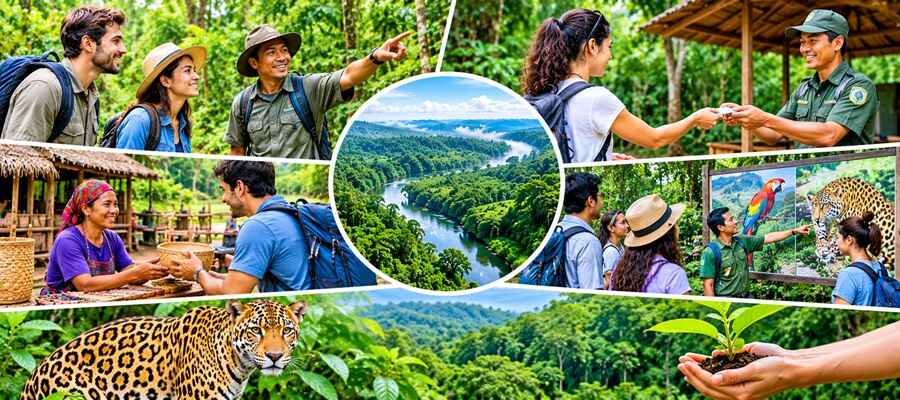
Travel may seem unrelated to forest protection, but responsible tourism can make a positive difference. Like:
Supports Local Jobs:
Tourists create demand for local guides, drivers, cooks, and accommodation workers.
Supports Conservation:
Entrance fees and tourism payments may help protected areas pay for park management, research, and conservation work.
Creates Local Income:
Tourism can give communities another way to earn money from healthy forests.
Raises Awareness:
Visitors learn about rainforest wildlife, local cultures, and environmental problems.
Encourages Forest Protection:
When communities benefit from responsible tourism, protecting natural areas can become an important part of local economic life.
5 Best Rainforest Destinations for Responsible Travellers
1. Amazon Rainforest, South America
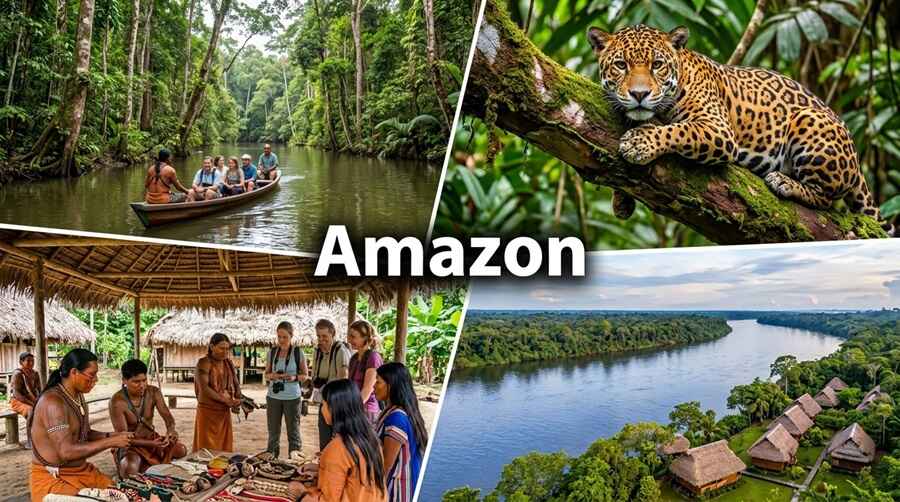
The Amazon Rainforest is the world’s largest tropical rainforest. It spreads across several South American countries, including Brazil, Peru, Colombia, and Ecuador.
The Amazon is home to many animals, birds, fish, and plants. Its huge rivers and green forests create an amazing natural landscape.
What to Experience:
- Take a guided boat trip along an Amazon river.
- Learn about rainforest plants and wildlife.
- Visit responsible community-based tourism projects.
- Stay in a locally operated lodge.
- Learn why forest protection is important.
Travel Tip: Choose a responsible local tour operator. Avoid activities that disturb wildlife or harm the natural environment.
2. Costa Rica’s Tropical Rainforests
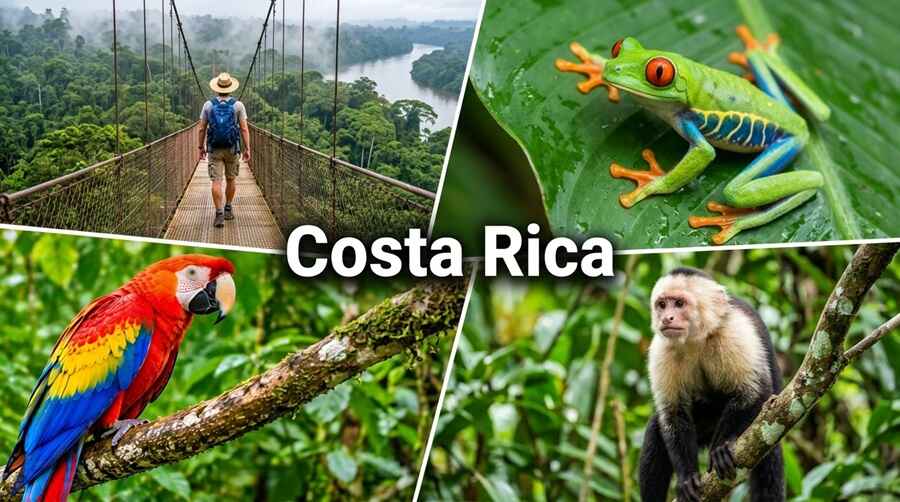
Costa Rica is famous for its rich wildlife, tropical forests, and nature-based tourism. Places such as Monteverde and national parks across the country attract visitors who enjoy exploring nature.
The country offers opportunities to see colourful birds, monkeys, butterflies, and many types of plants.
What to Experience:
- Walk along rainforest nature trails.
- Explore cloud forests and hanging bridges.
- Watch birds and other wildlife from a safe distance.
- Visit nature reserves with local guides.
- Learn about forest conservation.
Travel Tip: Stay on marked paths and never feed wild animals. Use local guides who follow responsible wildlife-viewing rules.
3. Borneo Rainforest, Southeast Asia
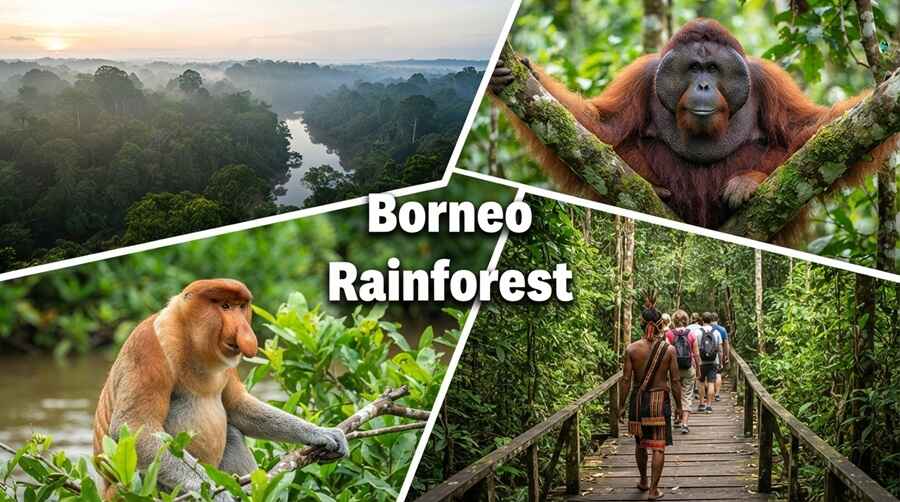
Borneo is a large island in Southeast Asia. It is shared by Malaysia, Indonesia, and Brunei.
Its rainforests are home to orangutans, proboscis monkeys, birds, and many other animals. The island also has a wide variety of tropical plants.
What to Experience:
- Explore rainforest trails with a local guide.
- Learn about orangutan conservation.
- Visit responsible wildlife observation areas.
- Discover local plants and forest life.
- Support community-based tourism.
Travel Tip: Choose ethical wildlife experiences. Never pay for activities that allow visitors to touch, feed, or take pictures with wild animals.
4. Madagascar’s Rainforests
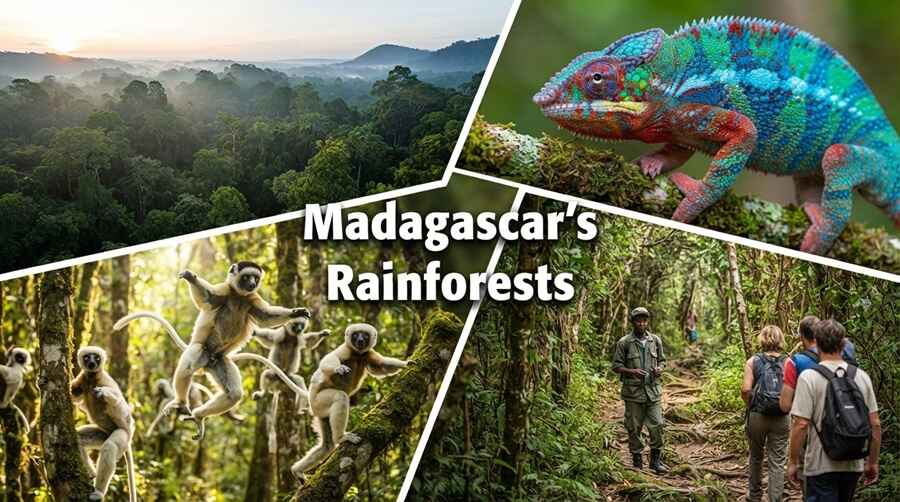
Madagascar, an island country off the east coast of Africa, is famous for its unique wildlife. Many animals found here do not live naturally anywhere else in the world.
Its rainforests are home to different types of lemurs, colourful chameleons, birds, and unusual plants.
What to Experience:
- Walk through rainforest parks with trained guides.
- Watch lemurs from a respectful distance.
- Learn about Madagascar’s unique plants and animals.
- Visit local communities and small businesses.
- Discover conservation activities.
Travel Tip: Follow park rules and avoid buying products made from protected wildlife or endangered plants.
5. Daintree Rainforest, Australia
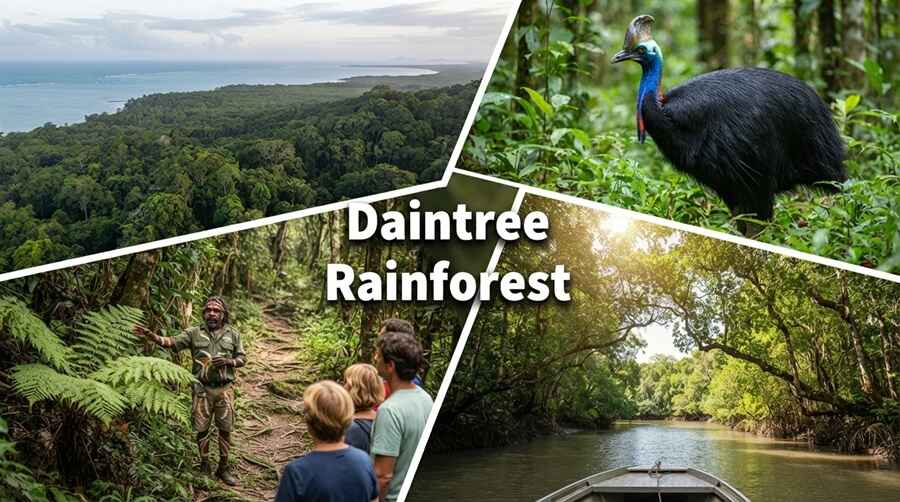
The Daintree Rainforest is in Queensland, Australia. It is known for its ancient tropical forests, rivers, and rich wildlife.
The area also has a strong connection to Aboriginal culture and knowledge.
What to Experience:
- Explore rainforest walking trails.
- Take a guided nature walk.
- Learn about local plants and wildlife.
- Discover Aboriginal-led cultural experiences.
- Enjoy the natural views of the forest and river.
Travel Tip: Choose guides who respect local culture and follow environmental rules. Ask permission before taking photographs of people or cultural activities.
Conclusion
Rainforests are important for wildlife, local communities, and the health of our planet. They need protection from deforestation, pollution, and other environmental threats.
Travel alone cannot save rainforests, but responsible tourism can make a meaningful contribution. It can support local jobs, help fund conservation, and encourage people to value natural places.
As a traveller, you can make thoughtful choices. Choose responsible tour operators, support local businesses, respect wildlife, and follow environmental rules.