10 Best Homemade Face Masks for Glowing Skin While Traveling

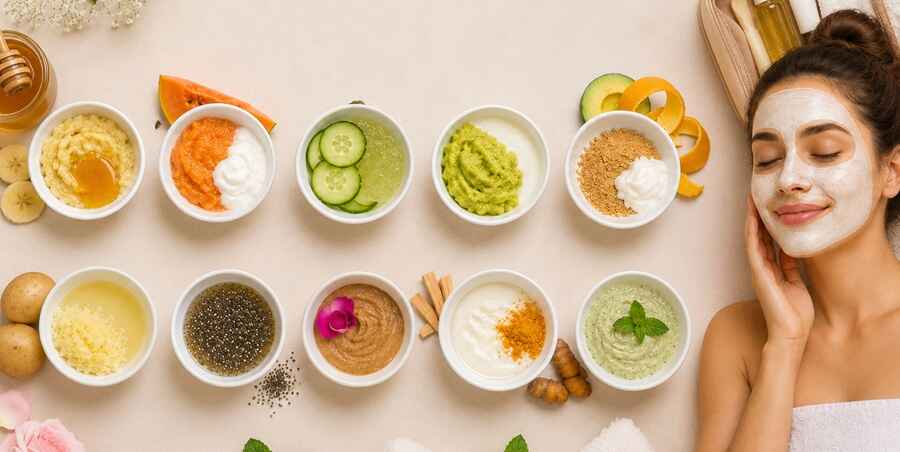
Healthy skin is important when you travel because it helps you feel fresh and confident, but changes in weather, long journeys, dry air, sun exposure, dust, and a busy schedule can sometimes leave your skin feeling dry, tired, or uncomfortable. A simple skincare routine can help you feel fresh while you explore new places.
Homemade face masks are one option for a relaxing skincare routine when you are traveling. Ingredients such as banana, cucumber, yogurt, honey, oatmeal, and aloe vera are commonly used in simple DIY skincare recipes. Depending on the ingredients, a mask may help your skin feel softer, moisturized, or refreshed.
In this post, you will find 10 easy homemade face masks for glowing-looking skin while traveling.
If you want more simple travel skincare ideas, check out our guide to 15 Natural Glass Skin Tips for Travelers.
10 Best Homemade Face Masks for Glowing Skin
- Banana & Honey Face Mask
- Papaya & Yogurt Face Mask
- Cucumber & Aloe Vera Face Mask
- Avocado & Milk Face Mask
- Orange Peel Powder & Yogurt Face Mask
- Potato Juice & Honey Face Mask
- Chia Seeds & Honey Face Mask
- Rose Water & Sandalwood Face Mask
- Coconut Milk & Turmeric Face Mask
- Mint & Yogurt Face Mask
1. Banana & Honey Face Mask
Banana and honey make a simple mask when your skin feels dry or needs some extra moisture.
Ingredients:
- ½ ripe banana
- 1 teaspoon honey
How to Make It:
- Mash the banana until smooth.
- Add the honey and mix well.
- Apply a thin layer to clean skin.
- Leave it on for about 10–15 minutes.
- Rinse gently with lukewarm water.
This mask can leave the skin feeling soft and comfortable. Because honey and banana can be sticky, rinse thoroughly without rubbing the skin.
Travel tip: This can be a simple option after a long day of sightseeing when your skin feels dry.
2. Papaya & Yogurt Face Mask
Papaya and plain yogurt are often included in homemade skincare routines. This combination can feel refreshing and leave the skin feeling smooth.
Ingredients:
- 2 tablespoons mashed ripe papaya
- 1 tablespoon plain yogurt
How to Make It:
- Mash the papaya until it becomes a smooth paste.
- Mix in the plain yogurt.
- Apply a small amount to clean skin.
- Leave it on for 10 minutes.
- Rinse thoroughly with lukewarm water.
Papaya contains naturally occurring enzymes, so some people may find it irritating, particularly if their skin is sensitive. Patch testing is especially important before using this mask.
Travel tip: If you have never used papaya on your skin before, it is better to test it at home rather than trying it for the first time during a trip.
3. Cucumber & Aloe Vera Face Mask
Cucumber and aloe vera can create a cooling and soothing-feeling mask, especially after spending time outdoors.
Ingredients:
- 2 tablespoons cucumber pulp or finely grated cucumber
- 1 tablespoon aloe vera gel
How to Make It:
- Finely grate or blend a small amount of cucumber.
- Mix it with aloe vera gel.
- Apply gently to clean skin.
- Leave it on for about 10–15 minutes.
- Rinse with cool or lukewarm water.
Choose aloe vera gel that is specifically made for skin use. If you are using a new aloe product, patch-test it first.
Travel tip: This can be especially pleasant after a warm day, although it should not replace sunscreen or other sun-protection measures.
4. Avocado & Milk Face Mask
Avocado has a creamy texture that works well in a simple moisturizing-style mask.
Ingredients:
- 2 tablespoons mashed ripe avocado
- 1 teaspoon milk
How to Make It:
- Mash the avocado until smooth.
- Add the milk gradually.
- Mix into a soft paste.
- Apply a thin layer to clean skin.
- Leave it on for 10–15 minutes.
- Rinse gently.
This mask may help your skin feel softer and more moisturized.
If you are sensitive to dairy products or have reacted to similar skincare ingredients before, skip the milk and choose a simpler option you already know your skin tolerates.
5. Orange Peel Powder & Yogurt Face Mask
Orange peel powder is a popular ingredient in traditional and homemade skincare recipes. When combined with plain yogurt, it makes a simple paste that can be used occasionally.
Ingredients:
- 1 teaspoon orange peel powder
- 1 tablespoon plain yogurt
How to Make It:
- Mix the orange peel powder with yogurt.
- Make a smooth paste.
- Apply a thin layer to your skin.
- Leave it on for about 10 minutes.
- Rinse gently without scrubbing.
This mask may not suit sensitive skin. Orange-based ingredients can sometimes cause irritation, so always patch-test first.
Important: Do not assume that because an ingredient contains vitamin C, applying it directly to your skin will provide the same benefits as a properly formulated skincare product.
6. Potato Juice & Honey Face Mask
Potato juice is another ingredient sometimes used in DIY skincare recipes. There is not strong evidence that this simple mixture produces dramatic changes in skin appearance, so think of it as an occasional homemade skincare experiment rather than a treatment.
Ingredients:
- 1 tablespoon fresh potato juice
- 1 teaspoon honey
How to Make It:
- Grate a small piece of clean potato.
- Squeeze out a small amount of juice.
- Mix it with honey.
- Apply a thin layer to clean skin.
- Leave it on for about 10 minutes.
- Rinse well.
Use a freshly prepared mixture and discard any leftovers.
If your skin feels uncomfortable or irritated, wash it off immediately.
7. Chia Seeds & Honey Face Mask
Chia seeds form a soft gel-like texture when mixed with liquid, making them interesting for a gentle DIY mask.
Ingredients:
- 1 teaspoon chia seeds
- 1 tablespoon water
- 1 teaspoon honey
How to Make It:
- Mix the chia seeds with water.
- Let them sit until they form a soft gel.
- Add honey and mix carefully.
- Apply gently to clean skin.
- Leave it on for around 10 minutes.
- Rinse thoroughly.
Do not scrub the chia seeds against your skin. The seeds can have a textured surface, and rubbing them may cause unnecessary irritation.
8. Rose Water & Sandalwood Face Mask
Rose water and sandalwood powder are commonly used in traditional beauty routines. They can be mixed into a simple paste for occasional use.
Ingredients:
- 1 tablespoon sandalwood powder
- Enough rose water to make a smooth paste
How to Make It:
- Add a small amount of rose water to the sandalwood powder.
- Mix until you get a smooth paste.
- Apply a thin layer.
- Leave it on for about 10 minutes.
- Rinse gently.
Choose products intended for cosmetic use and check the ingredient label. Fragrance-containing products can sometimes irritate sensitive skin.
Travel tip: If your skin is already irritated from sun, wind, or a new climate, skip this mask and keep your routine simple.
9. Coconut Milk & Turmeric Face Mask
Coconut milk and a very small amount of turmeric can make a simple traditional-style DIY mask.
Ingredients:
- 1 tablespoon coconut milk
- A small pinch of turmeric
How to Make It:
- Mix the coconut milk and turmeric.
- Apply a very thin layer to clean skin.
- Leave it on for around 5–10 minutes.
- Rinse thoroughly.
Use only a tiny amount of turmeric because it can temporarily stain the skin and clothing. Turmeric may also irritate some people, so patch-test before applying it to your face.
10. Mint & Yogurt Face Mask
Fresh mint and plain yogurt can create a cooling-feeling mask that may be refreshing after a busy travel day.
Ingredients:
- 1 tablespoon finely crushed fresh mint
- 1 tablespoon plain yogurt
How to Make It:
- Wash the mint thoroughly.
- Crush it into a fine paste.
- Mix it with plain yogurt.
- Apply a small amount to clean skin.
- Leave it on for about 10 minutes.
- Rinse gently.
Mint can feel refreshing, but it may also irritate sensitive skin. Patch testing is recommended.
A Simple Travel-Friendly DIY Skincare Kit
You do not need to carry a large collection of ingredients for a trip. In fact, carrying fresh fruits, dairy products, or homemade mixtures can be inconvenient, particularly when traveling internationally.
Instead, consider keeping your travel skincare routine simple.
You may pack:
- A small clean mixing bowl if practical
- A clean spoon
- A soft face towel
- A familiar moisturizer
- Sunscreen
- A skin-safe aloe vera gel you have used before
- One or two dry ingredients you already know your skin tolerates
For fresh ingredients, prepare only a small amount when it is practical and hygienic to do so. Also check the transportation rules for food, liquids, and plant-based products when traveling internationally.
Never store a homemade face mask for several days. Masks containing fresh fruit, vegetables, yogurt, milk, or other perishable ingredients are best prepared in a small amount and used immediately. Discard leftovers rather than saving them for another day.
Healthy Habits for Fresh-Looking Skin While Traveling
Face masks are only one small part of a travel skincare routine. Your everyday habits matter too.
1. Stay Hydrated
Drink water regularly according to your thirst and daily needs. Staying hydrated supports overall health and can help you feel better during busy travel days.
2. Get Enough Sleep
Late nights and early mornings can make you feel tired. Whenever possible, maintain a regular sleep schedule and give yourself enough time to rest.
3. Eat a Variety of Foods
Enjoy fruits, vegetables, grains, protein-rich foods, and other nutritious foods as part of a varied diet. There is no single food that guarantees glowing skin.
4. Use Sunscreen
Sun protection is one of the most useful parts of a travel skincare routine. Use a broad-spectrum sunscreen as directed on the label, and consider hats, sunglasses, shade, and protective clothing when appropriate.
5. Keep Your Routine Simple
Travel is not the best time to experiment with lots of unfamiliar skincare products. A gentle cleanser, moisturizer, and sunscreen may be enough for many people.
For more ideas, you can also read [Travel Beauty Hacks with Rice Water].
Common Mistakes to Avoid With DIY Face Masks
Homemade skincare can be fun, but a few simple precautions are important.
- Do not use a new mask without patch testing.
- Do not apply masks to broken, sunburned, or irritated skin.
- Do not scrub your face aggressively while removing a mask.
- Avoid lemon juice and other harsh DIY ingredients.
- Do not leave a mask on longer than necessary.
- Do not reuse leftover mixtures containing fresh ingredients.
- Avoid applying masks close to the eyes.
- Stop immediately if you experience burning, significant itching, or redness.
- Do not use too many new products at the same time.
If you have persistent skin problems or a significant reaction, a qualified healthcare professional or dermatologist can give you more appropriate advice.
Frequently Asked Questions
Can I use a DIY face mask every day?
There is no need to use homemade face masks every day. Even gentle ingredients can irritate some people’s skin when used too often. Occasional use is generally more practical, and your skin’s reaction should guide whether you continue.
Which homemade mask is best for dry-feeling skin?
Masks containing ingredients such as banana, honey, avocado, or yogurt may leave skin feeling softer or more moisturized. However, everyone’s skin is different, so patch testing is important.
Which mask brightens skin the fastest?
There is no homemade face mask that can reliably brighten everyone’s skin quickly. Papaya, orange peel, and turmeric are commonly mentioned in DIY beauty routines, but their effects vary and some can irritate sensitive skin.
If your main concern is dull-looking skin while traveling, you may also like [10 Best Homemade Face Masks for Dull Skin of Travelers].
Can I carry homemade face masks while traveling?
It is usually more practical to carry a few familiar, travel-friendly skincare products and prepare a fresh DIY mask only when appropriate. Fresh food ingredients can be inconvenient to transport and may be restricted when crossing international borders.
How long can I store a homemade face mask?
For masks made with fresh fruit, vegetables, yogurt, milk, or similar ingredients, it is safest and simplest to make a small amount and use it immediately. Avoid storing leftovers for later use.
Can natural ingredients make everyone’s skin glow?
No. Skin naturally varies from person to person, and there is no universal ingredient that guarantees a particular appearance. Healthy skin can have pores, texture, marks, and other completely normal features.
Conclusion
Homemade face masks can be a simple and relaxing addition to your travel routine, especially when you want a little extra skincare time after a busy day. Ingredients such as banana, honey, cucumber, aloe vera, avocado, and yogurt can make gentle DIY options, but they are not guaranteed treatments for specific skin concerns.
The most important part of travel skincare is keeping things simple: cleanse gently, moisturize when needed, use sunscreen, stay hydrated, get enough rest, and avoid experimenting with too many unfamiliar ingredients at once.
If you decide to try a homemade mask, make a fresh small batch, patch-test new ingredients, and stop if your skin becomes irritated. And remember, healthy skin does not need to look perfectly smooth or flawless—natural pores, texture, and small imperfections are normal.
The goal of a good travel skincare routine is not perfection. It is helping your skin feel comfortable, cared for, and healthy while you enjoy the journey.