10 Ways to Reduce Your Carbon Footprint While Traveling

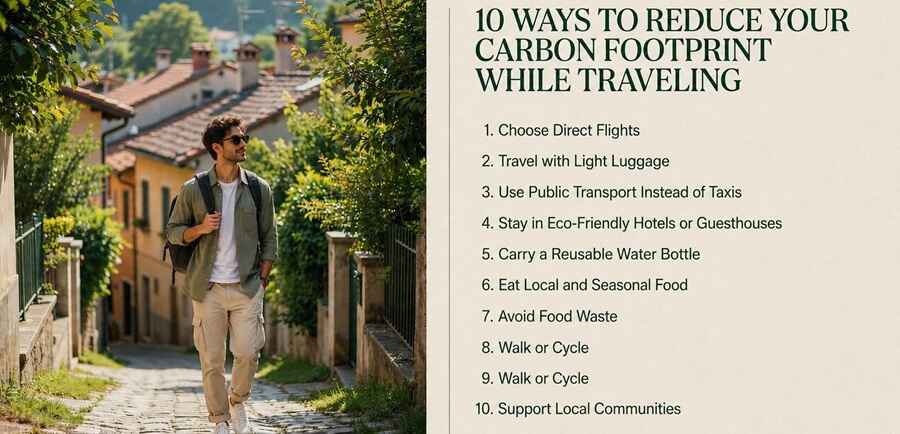
Traveling allows us to discover beautiful places, experience different cultures, and enjoy new adventures. But every journey has an environmental impact.
Flights, cars, buses, hotels, food, and other travel activities use energy and resources and can contribute to greenhouse gas emissions. These emissions are part of a traveler’s overall carbon footprint.
The good news is that you don’t have to stop traveling to make more environmentally conscious choices. Small changes in the way you plan and experience a trip can help reduce unnecessary emissions and waste.
From choosing transportation carefully to supporting local businesses, here are 10 simple ways to reduce your carbon footprint while traveling.
What Is a Carbon Footprint?
A carbon footprint refers to the greenhouse gas emissions associated with a person, activity, product, or trip. These emissions include carbon dioxide and other greenhouse gases, which are often expressed together as carbon dioxide equivalent (CO₂e).
Travel can contribute to a carbon footprint through transportation, accommodation, food, and other activities.
For example, using fuel-powered vehicles produces greenhouse gas emissions, while hotels use energy for lighting, heating, cooling, laundry, and other services.
Reducing your travel carbon footprint means looking for practical ways to use less energy, avoid unnecessary waste, and make more responsible choices during your journey.
10 Ways to Reduce Your Carbon Footprint While Traveling
1. Choose Direct Flights When Possible
Air travel can be a significant part of a trip’s carbon footprint.
When flying is necessary, consider a direct flight when the price and schedule work for you. A direct itinerary avoids additional takeoffs and landings that would occur with connecting flights, although the actual emissions of a journey depend on factors such as the aircraft, route, and passenger load.
You can also compare transportation options before booking. For shorter journeys, a train or other ground transportation may sometimes be a practical alternative to flying.
Simple tip:
Before booking, compare flight time, route, price, and available lower-emission transportation options rather than choosing automatically.
2. Travel With Light Luggage
Packing lighter may have a smaller environmental benefit than changing your transportation, but it is still a useful travel habit.
Carrying less luggage can reduce the amount of weight transported by planes and vehicles and can also make your journey easier.
Instead of packing for every possible situation, make a simple list of what you actually need.
Try this:
- Pack versatile clothing.
- Avoid unnecessary duplicates.
- Carry reusable travel essentials.
- Check the weather before packing.
- Use a smaller bag when practical.
The goal isn’t to pack as little as possible—just avoid carrying things you probably won’t use.
3. Use Public Transportation Instead of Taxis
When practical, choose buses, trains, metros, or trams instead of traveling alone in a taxi or private car.
Public transportation can move many passengers at once and may use less energy per passenger than individual car journeys.
It can also help reduce traffic and make it easier to explore busy cities without adding another vehicle to the road.
Good options include:
- Metro systems
- Local buses
- Trains
- Trams
- Shared transportation
Always choose the option that is safe, practical, and appropriate for your destination.
4. Choose Accommodation With Responsible Practices
Where you stay can also affect your travel footprint.
Instead of choosing a hotel simply because it calls itself “eco-friendly,” look for clear information about its environmental practices.
For example, an accommodation may:
- Use energy-efficient lighting and equipment
- Reduce unnecessary water use
- Have waste-reduction programs
- Offer towel and linen reuse
- Use renewable energy where available
- Reduce single-use products
Some properties may also have recognized sustainability certifications or independently verified environmental programs.
Travel tip:
Don’t assume that every “green” label means the same thing. Look for specific, transparent sustainability practices.
5. Carry a Reusable Water Bottle
A reusable water bottle is one of the easiest things to add to your travel routine.
Instead of purchasing single-use bottles repeatedly, carry a bottle that you can refill where safe drinking water is available.
This can reduce your reliance on disposable plastic bottles and may also save money during your trip.
Remember:
Only refill your bottle from a source that is known to provide safe drinking water. In places where tap water isn’t safe, use an appropriate water source or treatment method.
6. Choose Local and Seasonal Food When Practical
Food is another part of a trip’s environmental impact.
Choosing local and seasonal foods can be a thoughtful option because it can support local producers and connect you with the culture of your destination.
However, local food does not automatically have a lower carbon footprint. Food-related emissions can depend on how the food was produced, transported, stored, and prepared.
So rather than focusing only on how far food traveled, consider the bigger picture.
While traveling:
- Try locally available seasonal foods.
- Support local food businesses.
- Choose a variety of foods.
- Avoid unnecessary packaging when practical.
- Enjoy regional dishes as part of the travel experience.
Eating locally can be both an environmental and cultural experience when done thoughtfully.
7. Avoid Food Waste
Wasting food also means wasting the resources used to produce, transport, prepare, and serve it.
When eating out during your trip, order an amount that you are reasonably likely to finish.
If a restaurant serves a large portion, you may be able to save the leftovers—but only if they can be stored and transported safely.
Simple ways to reduce food waste:
- Don’t order more than you need.
- Share large dishes when appropriate.
- Choose smaller portions if available.
- Save leftovers when safe to do so.
- Avoid taking food that cannot be safely stored.
Reducing food waste is a simple habit that can make your travel more responsible.
8. Walk or Cycle for Short Trips
For short distances, walking or cycling can be a great alternative to using a car or taxi.
These options generally produce little to no direct transportation emissions during the journey and can reduce traffic in busy tourist areas.
Walking also gives you a chance to experience a destination more slowly.
You may discover:
- Local streets
- Small shops
- Parks
- Markets
- Cafés
- Historic neighborhoods
Travel tip:
Choose walking or cycling when the route, weather, traffic, and local conditions make it safe and practical.
9. Respect Nature
Reducing your carbon footprint is only one part of responsible travel.
When visiting forests, beaches, mountains, parks, or other natural areas, try to minimize your impact on the environment.
Follow simple rules:
- Stay on marked trails.
- Don’t disturb wildlife.
- Never feed wild animals.
- Avoid damaging plants.
- Take your waste with you.
- Follow park and conservation rules.
- Avoid taking natural objects where removal is prohibited.
You may have heard the phrase:
“Take only photos and leave only footprints.”
The idea is simple: enjoy natural places without unnecessarily changing or damaging them.
10. Support Local and Responsible Businesses
Supporting local businesses is an important part of responsible tourism.
When appropriate, consider spending money with local restaurants, cafés, guides, small shops, artisans, and community-based tourism providers.
You can also look for locally made souvenirs instead of mass-produced products that may have traveled long distances before reaching the destination.
Consider:
- Local guides
- Family-run restaurants
- Local cafés
- Small businesses
- Local artists and artisans
- Community-based tourism experiences
This doesn’t directly reduce your carbon footprint in every situation, but it can help make your trip more supportive of the local economy and more connected to the destination.
A Simple Eco-Travel Checklist
| Eco Habit | Why It Helps |
|---|---|
| Carry a reusable water bottle | Reduces reliance on single-use bottles |
| Use a reusable shopping bag | Reduces disposable bag use |
| Choose public transportation | Can reduce energy use per passenger |
| Walk short distances | Produces little direct transportation emissions |
| Choose local and seasonal food when practical | Supports local producers and can reduce some transport needs |
| Order only what you are likely to eat | Helps reduce food waste |
| Save leftovers when safe | Prevents edible food from being wasted |
| Turn off unnecessary lights and AC | Reduces unnecessary energy use |
| Reuse hotel towels when appropriate | Can reduce water and laundry-related energy use |
| Dispose of waste properly | Helps prevent litter and environmental harm |
| Recycle when appropriate | Can reduce the amount of waste sent for disposal |
Easy Ways to Make Your Next Trip Greener
You don’t need to completely change the way you travel.
Start with a few realistic habits:
Before your trip
- Compare transportation options.
- Pack only what you need.
- Research your accommodation.
- Bring reusable essentials.
- Learn about local environmental rules.
During your trip
- Use public transportation when practical.
- Walk short distances.
- Reduce unnecessary plastic use.
- Avoid wasting food.
- Support local businesses.
- Respect wildlife and natural areas.
At your accommodation
- Turn off lights and air conditioning when they aren’t needed.
- Reuse towels when appropriate.
- Avoid unnecessary water use.
- Use recycling facilities where available.
How Does Responsible Travel Connect With Rainforest Conservation?
Your travel choices can also affect environmentally sensitive destinations such as rainforests.
Responsible tourism can support local communities and conservation efforts when tourism is properly managed. At the same time, poorly managed tourism can create waste, disturb wildlife, and put pressure on fragile environments.
If you’re interested in how responsible tourism can support rainforest conservation, read our How Travel Can Save the Rainforest guide.
Frequently Asked Questions
What is the easiest way to reduce your carbon footprint while traveling?
Start with simple choices that fit your trip. Using public transportation, walking short distances, avoiding unnecessary food waste, carrying reusable items, and reducing unnecessary energy use at your accommodation are practical places to begin.
Does flying always have a high carbon footprint?
Air travel can contribute significantly to a trip’s greenhouse gas emissions, but the impact varies depending on the route, aircraft, passenger load, and other factors. When flying is necessary, comparing available transportation options and avoiding unnecessary connections can be helpful.
Does eating local food reduce carbon emissions?
Not necessarily. Food’s carbon footprint depends on more than transportation distance. Production, processing, refrigeration, and the type of food also matter. Choosing local and seasonal foods can still be a thoughtful way to support local producers and experience regional cuisine.
Are eco-friendly hotels really better for the environment?
Some accommodations have meaningful environmental programs, but “eco-friendly” is not a guarantee by itself. Look for specific information about energy, water, waste, and sustainability practices.
Can walking really make a difference?
Walking short distances instead of using a car or taxi generally produces little direct transportation emissions and can be a simple way to make city travel more sustainable.
Conclusion
You don’t need to be a perfect eco-traveler to make more responsible choices.
Start small. Carry a reusable bottle, use public transportation when practical, walk short distances, reduce food waste, avoid unnecessary energy use, and respect the natural places you visit.
Remember that not every travel decision has the same environmental impact. Transportation choices can be especially important, while everyday habits such as reducing waste and supporting responsible businesses can complement them.
The goal isn’t to make travel completely impact-free. It’s about traveling more thoughtfully and reducing unnecessary harm wherever you reasonably can.
When we make better choices before and during our journeys, we can enjoy exploring the world while taking greater care of the places we visit.