10 Historic Concert Venues Every Music Lover Should Visit

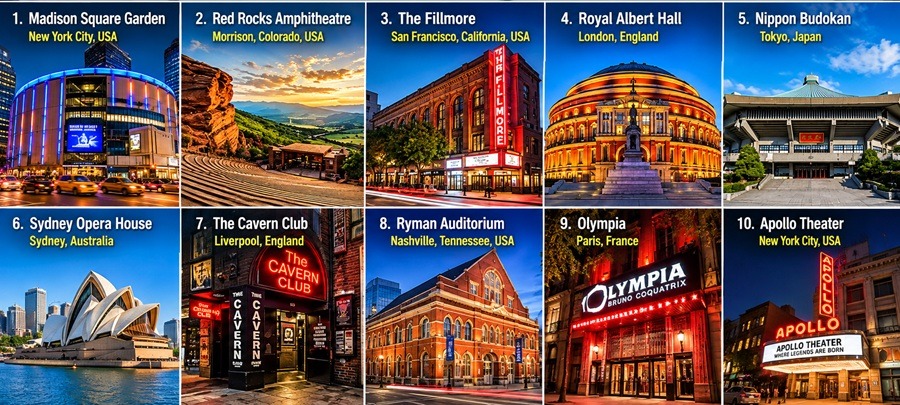
Historic concert venues are more than places where people gather to hear live music. They are part of music history, preserving stories of legendary performances, influential artists, changing musical styles, and the cultures of the cities around them.
From iconic halls in London and Paris to legendary clubs in Liverpool and San Francisco, these venues have helped shape the way audiences experience music.
For travellers who love concerts, music history, architecture, and local culture, visiting a historic venue can make a trip even more memorable. You can attend a live show, take a guided tour, explore nearby attractions, and discover the stories that made each venue special.
Here are 10 historic concert venues every music lover should consider visiting, along with practical travel ideas for exploring the surrounding city.
What Makes a Concert Venue Historic?
A concert venue can become historically important for several reasons. It may have hosted influential artists, introduced audiences to important musical movements, played a role in a city’s cultural development, or become closely associated with memorable performances.
Architecture can also be part of a venue’s appeal. Some historic venues are famous for their interiors, acoustics, age, or distinctive design.
For travellers, the experience can go beyond attending a concert. Many historic venues offer tours, exhibitions, archives, or other ways to learn about their past.
10 Historic Concert Venues Every Music Lover Should Visit
- Madison Square Garden – New York City, USA
- Red Rocks Amphitheatre – Morrison, Colorado, USA
- The Fillmore – San Francisco, California, USA
- Royal Albert Hall – London, England
- Nippon Budokan – Tokyo, Japan
- Sydney Opera House – Sydney, Australia
- The Cavern Club – Liverpool, England
- Ryman Auditorium – Nashville, Tennessee, USA
- Olympia – Paris, France
- Apollo Theatre – New York City, USA
1. Madison Square Garden – New York City, USA
Madison Square Garden is one of the world’s best-known arenas for live entertainment and has a long connection with major concerts and performers.
Its current location in Midtown Manhattan opened in 1968, and the venue has hosted generations of musicians and major entertainment events. Artists associated with performances at Madison Square Garden include Elvis Presley, Billy Joel, Madonna, Michael Jackson, Elton John, and many others.
For music travellers, visiting MSG can be combined with a wider New York itinerary.
Explore:
- Times Square
- Broadway
- Empire State Building
- High Line
- Central Park
You can also try classic New York foods such as pizza, bagels, cheesecake, and other local favourites.
Public transportation makes it particularly convenient to explore the area without relying on a car.
2. Red Rocks Amphitheatre – Morrison, Colorado, USA
Red Rocks Amphitheatre is one of the world’s most distinctive outdoor concert venues.
Located among dramatic red sandstone formations near Denver, the venue combines live music with a striking natural landscape. Its official history highlights performances by artists including The Beatles, U2, Sting, and many other major performers. (Red Rocks Amphitheatre)
One of the venue’s most memorable moments came with U2’s 1983 performance, which later became associated with the band’s live film and album Under a Blood Red Sky. (Red Rocks Amphitheatre)
During a visit, you can:
- Attend a concert
- Explore Red Rocks Park
- Walk around the amphitheatre
- Learn about the area’s geological landscape
- Add Denver to your itinerary
Because this is an outdoor venue at a high elevation, comfortable shoes and clothing suitable for changing weather are useful.
3. The Fillmore – San Francisco, California, USA
The Fillmore is deeply connected with San Francisco’s influential music scene of the 1960s.
The venue became an important part of the city’s counterculture and psychedelic music history, with performers such as Jimi Hendrix, Janis Joplin, The Grateful Dead, Santana, and Led Zeppelin appearing there.
The venue is also famous for its distinctive concert-poster tradition, which became an important part of San Francisco’s music and visual-art culture.
A trip to The Fillmore can easily become a broader San Francisco adventure.
Nearby attractions include:
- Golden Gate Park
- Haight-Ashbury
- Lombard Street
- Fisherman’s Wharf
- Chinatown
For food, you can explore San Francisco’s famous sourdough, seafood, and Mission-style burritos.
4. Royal Albert Hall – London, England
Royal Albert Hall has been part of London’s cultural life since its official opening in 1871.
Its stage has hosted an extraordinary range of performers, from classical musicians and orchestras to major popular artists. The venue’s official archive lists performers including The Beatles, Jimi Hendrix, Led Zeppelin, Eric Clapton, Elton John, and Adele. (catalogue.royalalberthall.com)
The building itself is also an attraction, with its distinctive Victorian architecture and long cultural history.
Visitors can attend a concert or explore the venue through available tours and visitor experiences.
You can combine a visit with:
- Hyde Park
- Kensington Gardens
- Victoria and Albert Museum
- Natural History Museum
- Science Museum
London’s Underground and other public transport options make the area easy to explore.
5. Nippon Budokan – Tokyo, Japan
Nippon Budokan is an important landmark in Tokyo with a history that began around the 1964 Tokyo Olympics. The official Budokan history records its opening ceremony in October 1964 and the Olympic judo competitions held there. (SITENAME)
The venue later became an important location for major music performances. The Beatles’ 1966 concerts helped establish Budokan as an internationally recognised concert venue, and many other major artists have performed there over the decades.
For travellers, the surrounding area offers plenty to explore.
You can visit:
- Imperial Palace
- Chidorigafuchi
- Akihabara
- Traditional neighborhoods
- Tokyo’s many food districts
Try Japanese favourites such as ramen, sushi, tempura, or other local dishes during your visit.
Because Tokyo’s public transportation system is extensive, trains and subways are practical options for getting around.
6. Sydney Opera House – Sydney, Australia
Sydney Opera House is both a world-famous architectural landmark and one of Australia’s major performing arts venues.
Officially opened in 1973, the building was designed by Danish architect Jørn Utzon and became one of the defining symbols of Sydney. The Opera House describes itself as a World Heritage-listed architectural masterpiece and a major performing arts centre. (Sydney Opera House)
Its performance spaces host music, opera, theatre, dance, and other cultural events.
Visitors can:
- Attend a performance
- Take a guided tour
- Explore Sydney Harbour
- Visit the Royal Botanic Garden
- Walk around Circular Quay
- Explore The Rocks
Sydney Harbour Bridge is also nearby, making it easy to combine several major attractions in one day.
7. The Cavern Club – Liverpool, England
The Cavern Club is one of the most important music venues in Liverpool and is closely connected with the early history of The Beatles.
The club opened in 1957 and became a major part of Liverpool’s developing beat-music scene.
The Beatles first performed there in February 1961, and their final Cavern performance in 1963 brought their total number of appearances to 292. (Cavern Club)
That history makes the venue especially appealing to Beatles fans and travellers interested in British pop music.
While visiting Liverpool, you can also explore:
- The Beatles Story
- Royal Albert Dock
- Liverpool Waterfront
- Mathew Street
- Other Beatles-related locations
Liverpool is also a great place to explore local food, including traditional dishes such as Scouse.
8. Ryman Auditorium – Nashville, Tennessee, USA
Ryman Auditorium is one of the most important historic music venues in the United States.
Built in 1892, the venue began as the Union Gospel Tabernacle and later became famous as the home of the Grand Ole Opry from 1943 to 1974. Its deep connection with country music earned it the nickname “Mother Church of Country Music.” (ryman.com)
The Ryman’s stage has hosted performers including Elvis Presley, Johnny Cash, Hank Williams, and many other influential musicians. (ryman.com)
Today, visitors can take tours and attend live performances.
A Nashville music itinerary can also include:
- Country Music Hall of Fame
- Broadway
- Johnny Cash-related attractions
- Music Row
- Downtown Nashville
And of course, Nashville is a great place to explore local barbecue and other Southern food traditions.
9. Olympia – Paris, France
Olympia, also known as Olympia Bruno Coquatrix, is one of Paris’s best-known historic music halls.
Opened in 1888, the venue has a long history of popular entertainment and music performances. Its stage has been associated with major French and international performers, including Edith Piaf and The Beatles.
For music travellers, Olympia offers a chance to connect Paris’s famous cultural landscape with its long tradition of live entertainment.
You can combine your visit with attractions such as:
- Palais Garnier
- Louvre Museum
- Champs-Élysées
- Tuileries Garden
- Montmartre
Paris also offers plenty of opportunities to enjoy local food, from pastries and croissants to café meals and other French specialities.
The Paris Metro is one of the easiest ways to explore the city.
10. Apollo Theatre – New York City, USA
The Apollo Theatre is one of the most historically important music venues in the United States.
The theatre opened in 1914 and became a major platform for Black performers and American music. According to the Apollo’s official history, the venue played an important role in the development and presentation of jazz, swing, bebop, R&B, gospel, blues, and soul. (apollotheater.org)
Artists including Ella Fitzgerald, Billie Holiday, James Brown, Gladys Knight, and many others became associated with the Apollo stage. (apollotheater.org)
One particularly important moment came in 1962, when James Brown recorded Live at the Apollo, helping cement the venue’s place in music history. (apollotheater.org)
The Apollo is located in Harlem, making it a great starting point for exploring an important part of New York’s cultural history.
You can also explore:
- Harlem’s historic streets
- Central Park
- The Metropolitan Museum of Art
- Broadway
- Times Square
The Apollo is especially valuable for travellers who want to understand not only famous performances but also the broader cultural history surrounding American music.
Planning Your Historic Music Trip
A music-focused trip works best when you plan around the concert schedule rather than simply choosing a season.
Before booking, check:
- Official concert dates
- Ticket availability
- Venue rules
- Tour schedules
- Opening hours
- Public transportation
- Local weather
- Accommodation prices
If you are travelling mainly to attend a specific concert, booking transportation and accommodation early can be helpful.
For a broader music-history trip, consider visiting during spring or autumn when weather may be comfortable in many destinations. However, always check the local conditions because climate varies significantly between cities.
Pack:
- Comfortable walking shoes
- Portable phone charger
- Weather-appropriate clothing
- A reusable water bottle
- Concert tickets or digital confirmations
- Hearing protection for loud performances
Most importantly, leave some free time in your itinerary. Historic music venues are often located in neighbourhoods with their own cultural stories.
If you enjoy discovering cities through music, explore our guide to Top 6 Iconic Cities for Pop Music Travellers for more music-inspired travel ideas.
Explore the City Beyond the Concert
One of the best things about music tourism is that the concert doesn’t have to be the entire trip.
For example:
New York: Combine Madison Square Garden or the Apollo with museums, neighbourhoods, parks, and Broadway.
London: Pair Royal Albert Hall with London’s museums, historic streets, and parks.
Liverpool: Follow The Beatles’ story through the Cavern Club and other city landmarks.
Nashville: Combine the Ryman with the city’s country-music attractions.
Tokyo: Visit Nippon Budokan while exploring historic and modern areas of Tokyo.
Sydney: Pair a performance at the Opera House with Sydney Harbour and nearby cultural attractions.
This approach turns a concert visit into a complete travel experience.
Local Foods to Try on a Music-Lover’s Trip
Food is another easy way to connect with a destination’s culture.
In New York, try pizza, bagels, or cheesecake.
In Nashville, explore local barbecue and other Southern food traditions.
In San Francisco, try sourdough bread, seafood, or a Mission-style burrito.
In London, sample traditional British dishes and explore the city’s diverse food scene.
In Tokyo, try ramen, sushi, tempura, or other Japanese specialities.
In Sydney, explore seafood, meat pies, and other Australian favourites.
In Paris, enjoy croissants, pastries, and a traditional café meal.
And in Liverpool, try local dishes such as Scouse while exploring the city’s music history.
You don’t have to visit expensive restaurants. Local cafés, markets, and casual eateries can also be excellent ways to experience a city’s food culture.
Frequently Asked Questions
What is the oldest venue on this list?
Olympia in Paris opened in 1888, while Ryman Auditorium opened in 1892. Both have more than a century of history.
Which venue is best for Beatles fans?
The Cavern Club in Liverpool is an obvious choice because The Beatles performed there 292 times between 1961 and 1963. (Cavern Club)
Which venue is best for country music fans?
Ryman Auditorium in Nashville is particularly significant because of its long connection with the Grand Ole Opry and country music history. (ryman.com)
Which venue combines music with architecture?
Sydney Opera House is an excellent example because its architectural importance is almost as famous as its performing arts program. (Sydney Opera House)
Do I need to attend a concert to visit these venues?
Not necessarily. Some historic venues offer tours, exhibitions, or visitor experiences even when you aren’t attending a performance. Always check the venue’s official visitor information before planning your visit.
Conclusion
Historic concert venues offer much more than a place to watch live music. They are windows into the musical, cultural, and architectural history of the cities where they stand.
From Royal Albert Hall in London and Olympia in Paris to the Cavern Club in Liverpool and Ryman Auditorium in Nashville, each venue has its own story. Red Rocks adds a spectacular natural setting, Sydney Opera House combines music with iconic architecture, Nippon Budokan connects sport and music history, while New York’s Madison Square Garden and Apollo Theater represent different chapters of the city’s enormous entertainment legacy.
For music lovers, visiting these places can turn an ordinary vacation into a journey through music history.
So the next time you plan a trip, don’t just ask “Where should I go?”
Ask “What music history can I experience there?”
And if you enjoy discovering destinations through music, explore our guide to [Top 6 Iconic Cities for Pop Music Travellers] for more music-inspired travel ideas.