How to Plan a Stress-Free Family Vacation


Imagine this: You are at the airport. One child is crying, another has forgotten their headphones, and you are searching through the bags for snacks. Sounds familiar?
Now imagine something different. Everyone is happy, the bags are ready, and you are excited about the trip.
That is the dream of a stress-free family vacation.
A stress-free family vacation does not mean that everything will go perfectly.
It means being prepared and staying calm when things do not go as planned.
In this post, you will find simple tips to plan a family vacation that is fun, calm, and full of happy memories.
Why Are Family Vacations So Stressful?
Family vacations can feel stressful for many reasons.
1. High Expectations vs. Reality
We often imagine a perfect vacation where everyone is happy, the weather is great, and everything goes smoothly.
But real trips do not always go this way. Flights can be delayed, the weather can change, and family members may disagree about what to do.
Even small problems can quickly create stress.
2. Too Many People, Too Many Opinions
When many people travel together, everyone may want to do different things.
Some may want to visit a new place, while others may want to rest or eat somewhere else.
Trying to make everyone happy can be difficult.
Children and teenagers may also have different needs and energy levels.
3. Money Problems
Family vacations can be expensive.
After spending a lot of money, you may feel that everything needs to go perfectly.
If something goes wrong, you may worry about the money you have already spent.
This can make it harder to relax and enjoy the trip.
4. Lack of Personal Space
During a family trip, everyone may spend most of the time together.
There may be very little time to relax alone or enjoy some quiet time.
After a few days, this can make people tired or annoyed, especially during a long trip.
5. Problems for Parents
Parents often have many things to manage during a family vacation.
They need to keep everyone safe, fed, happy, and ready on time.
Because of this, parents may feel very tired at the end of the day instead of feeling relaxed.
6. Travel Problems
Travel involves many tasks, such as booking flights and hotels, packing bags, renting cars, and keeping important tickets safe.
Sometimes, one small problem can change the whole plan.
A flight delay, lost luggage, or a sick child can quickly make the trip more stressful.
How to Plan a Stress-Free Family Vacation: Step by Step
Step 1: Choose the Right Place to Visit

Choosing the right destination is an important part of a happy family trip.
Your family may like beaches, nature walks, wildlife, or old city streets. It is also important to choose a place that is easy and comfortable for families.
But before choosing a destination, do some online research. Read reviews from other parents and see what they liked or did not like.
A little research can help you avoid problems and enjoy a smoother family trip.
Here are four popular types of destinations for family trips:
1. All-Inclusive Resorts:
These resorts are popular in beach destinations such as Mexico and the Caribbean.
Meals and many activities are included, so parents do not have to plan everything.
2. Theme Parks:
Places such as Disney World and Legoland offer rides, shows, and fun activities for both children and adults.
3. National Parks:
Many national parks have easy walking trails, beautiful views, and fun learning programs.
They can be a good choice for families with young children.
4. Kid-Friendly Cities:
Cities such as London and San Diego have museums, parks, and historic places.
Children can have fun while adults can enjoy the local culture and history.
Top 5 Best Greek Islands for Families
Step 2: Make a Smart Plan Before You Go
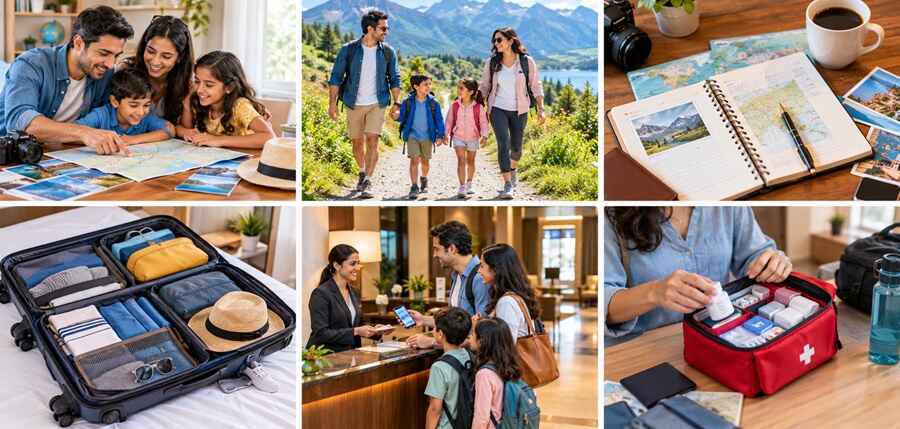
A good family trip starts with a good plan.
Planning ahead can help avoid problems and make the journey easier for everyone.
I) Involve Everyone (Age-Appropriate)
Let your children help plan the trip.
Instead of simply telling them where you are going, let them help make some small choices.
For example, show them two or three fun activities and let them choose one.
When children help plan, they often feel more excited about the trip.
Even simple choices, such as picking a road-trip snack, can make the journey more fun.
II) Set Realistic Expectations Early
Your family trip may not be perfect, and that is okay.
A stress-free vacation does not mean everything will always go according to plan.
Be ready for things like flight delays, bad weather, or tired children.
When you expect some problems, it can be easier to stay calm and enjoy the trip.
III) Plan Your Days, But Do Not Over-Plan
Make a simple plan for each day, but do not fill every hour with activities.
Leave some free time for rest, meals, and fun.
Sometimes, the best family memories come from unexpected places.
You may discover a beautiful park, a fun café, or an interesting local attraction that was not part of your original plan.
IV) Budget Wisely to Avoid Money Stress
Money problems can make a family vacation stressful.
So, create a clear travel budget before you leave home.
Book flights and hotels early when possible to find better prices.
Also, keep some extra money for unexpected costs, such as emergency needs or souvenirs.
You may also consider international travel insurance for additional protection during your trip.
V) Pack Smart Using a Checklist
Packing can be stressful, but a simple checklist can help you stay organized.
Keep important items in separate travel bags, and you can use different colors for each family member if that makes things easier.
Try to pack light, but do not forget important items such as medicines, chargers, passports or IDs, and things to keep children busy.
It is also a good idea to keep a small change of clothes and basic toiletries in your carry-on bag.
This can be helpful if your main luggage is delayed.
VI) Pre-Book Your Key Travel Needs
Book important things before your trip, such as hotels, rental cars, and tickets for popular attractions.
This can make your arrival easier and reduce last-minute stress.
When you already know where you will stay and how you will get around, you can feel more relaxed.
Booking early may also help you avoid long waits and find better prices.
VII) Health & Safety Checks
Before leaving home, check your family’s basic health and safety needs.
Pack daily medicines, a small first-aid kit, and enough sunscreen.
Keep a list of important local emergency numbers and find out where the nearest hospital or medical facility is located at your destination.
It is also a good idea to check current travel alerts and local conditions before your trip.
This can help you prepare for possible weather, transportation, or safety problems.
Step 3: During Your Trip: Enjoy the Journey

Once your trip begins, focus on enjoying time together as a family.
A few simple habits can help keep the trip calm, fun, and full of happy memories.
I) Prioritise Rest and Downtime
Even a well-planned trip can feel stressful when everyone is tired.
Do not try to fit too many activities into one day.
Let young children take naps when they need them.
Adults also need some quiet time to rest and relax. A well-rested family can enjoy the trip much more.
II) Stay Flexible When Plans Change
Travel plans can change, so try to stay calm and flexible.
Your bus may be late, or a museum may be closed.
Instead of getting upset, look for something else to do.
You can try a local snack, visit a nearby place, or simply sit and watch people.
Sometimes, unexpected moments can become wonderful family memories.
III) Enjoy Local Experiences
Make your trip more special by trying local food instead of always eating at large chain restaurants.
Visit a small local café or explore a busy market.
These simple experiences can create fun memories and stories that your family can enjoy for years.
IV) Give Simple Roles to Your Kids
Give your children small tasks during the trip to keep them involved.
One child can be the “map reader,” while another can choose the snacks.
When children help with the trip, they often feel more excited and included.
V) Limit Screen Time for Everyone
Phones and tablets can be useful during long journeys, but try to limit screen time.
Encourage everyone to look outside, talk, play, and enjoy the places around them.
Set simple rules for phones and tablets so your family can spend more time together.
VI) Capture Memories Without Overdoing It
Take photos during your trip, but remember to enjoy the moment with your family.
Take a few pictures and then put your phone away.
A travel journal can also be fun for children.
They can draw pictures or write about their favorite parts of the day.
VII) Keep Everyone Hydrated and Fed
Always carry water bottles and healthy snacks in your bag.
This is especially helpful when traveling with children.
When people are hungry or thirsty, they can become tired and upset.
A quick snack and some water can help everyone feel better and enjoy the day.
Step 4. After Returning Home: Cherish the Memories

The fun does not have to end when you return home.
Take some time to remember the happy moments from your trip.
Talking about the trip can help keep those memories alive.
It can also help your family plan better trips in the future.
I) Share Your Favorite Moments
Sit together and talk about your favorite parts of the trip.
You can share the funniest, most exciting, or most special moments.
Look at your photos together and enjoy the memories.
You can also make a simple photo album or scrapbook as a fun family activity.
II) Learn Lessons for Next Time
Think about what worked well and what did not.
Maybe a certain game or snack was very helpful, or perhaps an activity was too long for the children.
Write down these simple lessons for your next trip.
They can help you plan a more comfortable and enjoyable family vacation.
Frequently Asked Questions (FAQ)
How can I plan a stress-free vacation?
Start planning early to make your vacation easier. Let your family help choose the destination.
Set a clear budget and book flights and hotels early. Do not plan too many activities. Leave some free time to relax and enjoy unexpected moments.
How can I plan a trip without getting overwhelmed?
Break your travel planning into small steps. First, choose your destination and travel dates.
Then, book one thing at a time, such as flights and hotels. Use a simple checklist and share some of the planning with your family.
Where is the best vacation spot for a family?
The best place depends on what your family likes. Choose a destination with activities for both children and adults.
All-inclusive resorts, cities with fun museums, and peaceful nature areas with easy trails can all be good choices.
Which location is best for a family trip?
A good family destination should have fun things to do for everyone.
It could be a theme park, a peaceful beach, or a beautiful park. The right place can make the whole trip more enjoyable.
What is the most affordable vacation for a family?
Travel during the off-season when prices are often lower. Choose a place to stay with a kitchen so you can prepare some meals yourself.
You can also save money by visiting free places such as national parks, public beaches, and local markets.
How can I take a mental health vacation?
A mental health vacation should focus on rest and peace. Choose a quiet place, such as a cabin or a peaceful beach.
Try to stay away from work and limit screen time. Spend your time reading, walking, relaxing, and enjoying the quiet.
Conclusion
The secret to a stress-free family vacation is not having a perfect trip.
It is about planning well, staying flexible, and enjoying time with your loved ones.
Good planning and being present can turn travel problems into happy memories that you can remember for years.
Family trips can become easier with some preparation, patience, and plenty of fun.
Stay safe, enjoy your time together, and make every moment special.